
Regenerative Therapy
What is Regenerative Therapy
Regenerative therapy is an advanced, non-surgical treatment approach that focuses on repairing, restoring, and regenerating damaged tissues in the body. It works by stimulating the body’s natural healing process using cells, growth factors, or biologic techniques to improve function and reduce pain. This therapy is commonly used for musculoskeletal conditions, helping patients recover faster while addressing the root cause of injury rather than just managing symptoms.
Finding Regenerative Therapy in Hollywood & Near You
As awareness of innovative healing options continues to grow, more people are actively seeking convenient and effective solutions close to home. If you are searching for regenerative therapy Hollywood or regenerative therapy near me, advanced clinics offer personalized, patient-focused treatments designed to enhance recovery and mobility. These therapies support tissue healing, reduce inflammation, and improve overall function, helping patients achieve long-term relief and a better quality of life.
Class IV Laser Therapy
Laser therapy is a medical treatment that uses focused light to stimulate a process called photobiomodulation (PBM). During PBM, photons enter the tissue and trigger a biological cascade of events that leads to an increase in cellular metabolism, which can decrease pain and inflammation and accelerate the healing process.
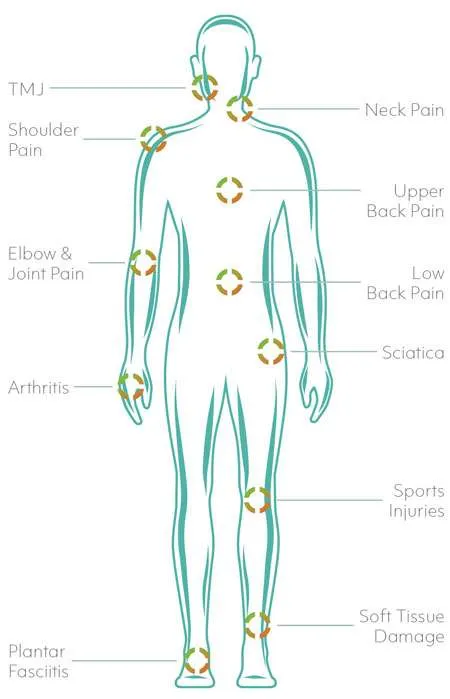
Experience Pain Relief and Reduced Inflammation Associated with:
5 Reasons to Try Class IV Laser:
- The number 1 reason to try laser therapy? It works! When you are suffering from a painful injury or condition, deep tissue laser therapy can provide powerful pain relief, promote tissue repair, and reduce swelling– even when other therapies have failed.
- Deep tissue laser therapy treatments are very fast – typically lasting between 4-7 minutes, depending on the size of the area treated. The results are often fast too, with many patients reporting pain relief and improved range of motion after the very first treatment.
- The therapeutic benefits of deep tissue laser therapy extend far beyond the treatment itself. After each treatment, patients can expect notable pain relief, with the effects lasting longer after each treatment.
- Deep tissue laser therapy can be used on most patients with minimal contraindications. With over 1 million treatments performed worldwide each month, it offers a safe alternative to opioid pain killers and surgical intervention in many cases.
- There is a significant body of evidence supporting the use of deep tissue laser therapy as both an adjunct and a standalone treatment for a variety of musculoskeletal conditions. From head to toe, researchers have concluded that laser therapy is effective for reducing pain, increasing range of motion and improving overall quality of life for patients suffering from many common and difficult-to-treat conditions.
Frequently Asked Questions
What is regenerative therapy?
Regenerative therapy is a treatment designed to support the body’s natural healing process and help improve tissue repair, function, and recovery.
What does it feel like?
Laser therapy treatments must be administered directly to skin, as clothing or topical dressings interfere with delivering light to tissues beneath the skin. Patients will feel a soothing warmth as the therapy is administered. Many patients receiving Class IV Therapy Laser treatments report enjoying the experience, especially when the massage ball treatment head is used to deliver what is often referred to as a “laser massage.” Patients receiving treatments with higher-power lasers also frequently report a rapid decrease in pain. For someone suffering from chronic pain, this effect can be particularly pronounced.
How long do treatments last?
With Class IV lasers, treatments are quick, usually 4-7 minutes, depending on the size, depth, and chronicity of the condition being treated. High-power lasers are able to deliver a lot of energy in a small amount of time, allowing therapeutic dosages to be achieved quickly.
How many treatments will I need?
Patients generally see results after 3 to 5 treatments. Clinicians will develop specific plans of care based on the diagnosis and the tissues that are involved. Chronic conditions often require more therapy than acute.
What conditions can regenerative therapy help with?
Regenerative therapy may help with joint pain, sports injuries, tendon issues, arthritis, back pain, and other musculoskeletal conditions.
Is regenerative therapy painful?
Most regenerative therapy treatments involve little to no discomfort. Some people may experience mild soreness after treatment.
Is regenerative therapy safe?
Regenerative therapy is generally considered a minimally invasive treatment when performed by qualified healthcare professionals.
Can regenerative therapy help avoid surgery?
In some cases, regenerative therapy may help reduce symptoms and improve function, potentially delaying or reducing the need for surgery.